Pregnancy Diet for Every Trimester
A trimester-by-trimester Indian pregnancy diet guide: what to eat, what to limit, hydration, supplements and practical meal ideas.
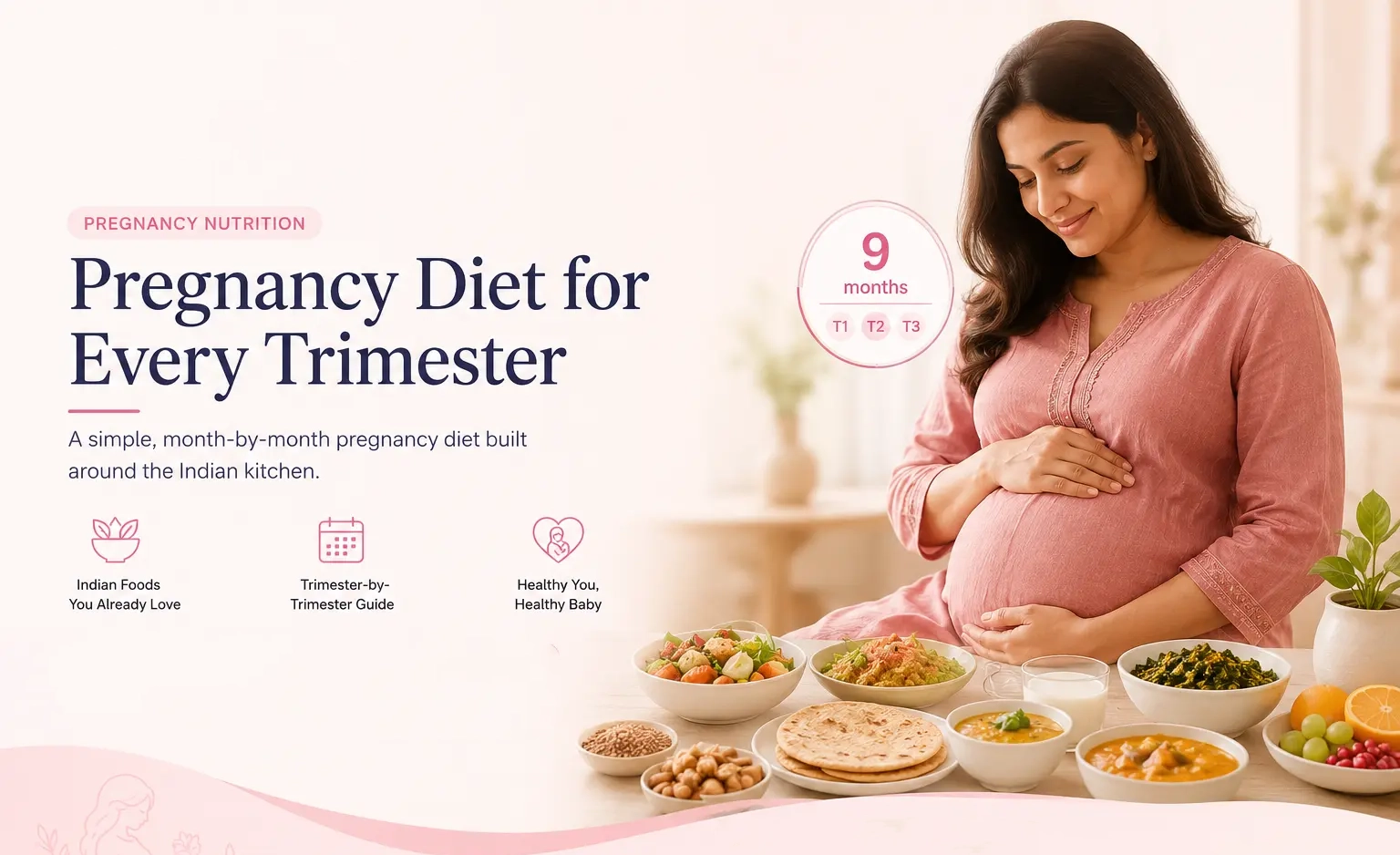
A simple, month-by-month eating guide designed specifically for expecting Indian mothers — built around the foods already in your kitchen.
Few questions cause more confusion in an Indian household than “what should I eat now that I’m pregnant?” Everyone has an answer — your mother, your mother-in-law, the neighbour, a forwarded PDF. The good news: a healthy pregnancy diet isn’t complicated and doesn’t need exotic or expensive foods. It mostly lives in your everyday kitchen — the dal, the sabzi, the curd, the seasonal fruit. This is your simple, trimester-by-trimester guide, made for expecting Indian mothers in Delhi NCR.
The golden rule: you are not “eating for two”
Let’s clear up the biggest myth first. You don’t need to double your food. You need almost no extra calories in the first trimester, about 350 extra a day in the second, and roughly 450 extra in the third — the size of a small bowl of dal-chawal or a glass of milk with a handful of nuts.
What changes through the nine months isn’t how much you eat. It’s what your body and baby need most at each stage. Here’s how that looks, trimester by trimester.
First Trimester
If you’re barely able to eat in these early weeks, don’t panic — that’s very common. For the full picture of these months, read our gentle guide to your first trimester.
Second Trimester
This is also when your 20-week anomaly scan usually happens — a good moment to check in on both baby’s growth and your own nutrition.
Third Trimester
Through all nine months, the best pregnancy diet is the one your grandmother would recognise — fresh, seasonal, home-cooked, and balanced.
Indian superfoods for your whole pregnancy diet
You don’t need imported berries or fancy powders. These everyday Indian foods carry you through all three trimesters:
Seven foods worth eating most days
What to gently limit
Best kept off your plate
- Raw papaya and pineapple, especially in early pregnancy
- Too much caffeine — stick to one cup of chai or coffee a day
- Street food, particularly during the monsoon
- Unpasteurised milk, raw eggs and undercooked meat
- Very oily, very salty or very sugary foods in excess
- Alcohol — completely, throughout pregnancy
Water & supplements: the quiet essentials
Food alone often can’t meet every need during pregnancy. Alongside your meals, remember to drink 8 to 10 glasses of water a day — more during Delhi’s brutal summers — and take the folic acid, iron, calcium and vitamin D supplements your doctor prescribes. Take what your gynaecologist recommends, not what a WhatsApp forward suggests.
A note for expecting mothers in Delhi NCR
Eat seasonal and local where you can — sarson and palak in winter, lauki and torai in summer, fresh fruit at its peak. Be extra careful with food hygiene in Delhi, Noida, Gurgaon, Ghaziabad and Faridabad during the hot and monsoon months, when stomach infections rise. And remember that every pregnancy is unique: a woman with gestational diabetes, anaemia, or twins will need a tailored plan.
At FemmeNest — Centre for IVF & Gynaecology in East Delhi, our maternity team builds personalised pregnancy diet and care plans for every mother we look after — because good nutrition is one of the simplest, most powerful gifts you can give your growing baby.
If you want a deeper look at the first twelve weeks, revisit our first trimester guide. If you’re approaching the midway scan, our explainer on the 20-week anomaly scan is a helpful next read. And if your baby ever needs extra support after birth, our look inside a Level-III NICU can help that world feel less intimidating.
Frequently Asked Questions
You do not need to eat for two. In the first trimester you need almost no extra calories, about 350 extra calories a day in the second trimester, and around 450 extra in the third — roughly a bowl of dal-chawal or a glass of milk with nuts. Quality matters more than quantity.
Focus on folate-rich foods like palak, methi, dal, citrus fruits and fortified atta in the first trimester. Eat small, frequent, nausea-friendly meals such as dry toast, roasted chana and ginger. Folate helps prevent neural tube defects.
Everyday Indian superfoods for pregnancy include dal and legumes for protein and iron, curd and paneer for calcium, ragi for calcium and iron, green leafy vegetables for folate, seasonal fruits for vitamins, and nuts and seeds for healthy fats and omega-3.
Limit or avoid raw papaya and pineapple in early pregnancy, excess caffeine (keep to one cup of chai or coffee a day), street food especially in the monsoon, unpasteurised milk, raw eggs, undercooked meat, and alcohol completely.
eat well, grow well —
Get Your Personalised Pregnancy Diet Plan
Every mother and every pregnancy is different. Book a maternity consultation at FemmeNest and get a diet and care plan made just for you. Exclusive ₹10,000 discount on maternity packages for the first 1,000 moms-to-be.