Gestational Diabetes: The Guide Every Indian Mother Needs
Gestational diabetes affects up to 1 in 5 Indian pregnancies — far higher than in Western women. Understand the OGTT test, what your numbers mean, an Indian GDM diet, and when to worry. By FemmeNest, Delhi NCR.
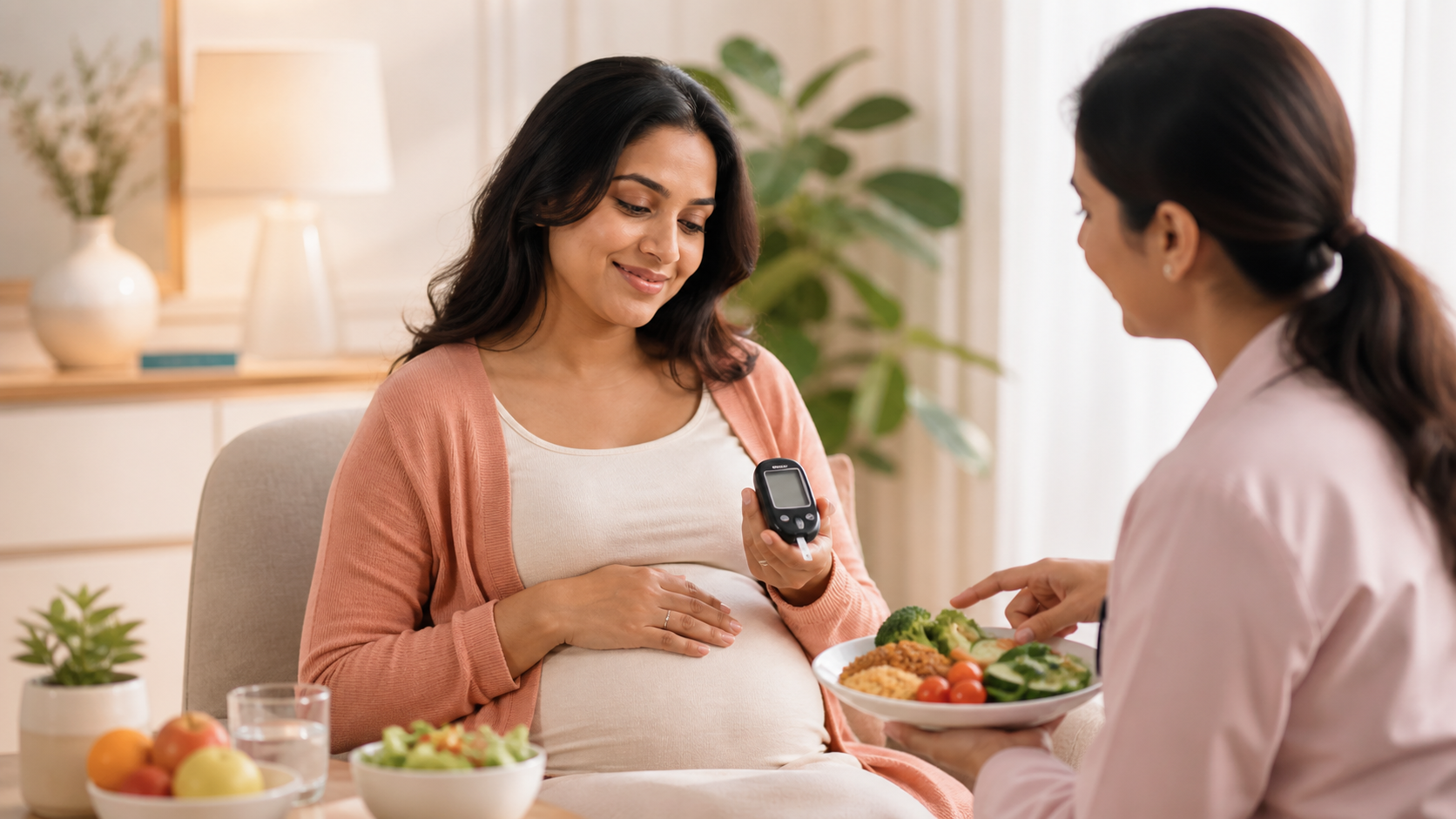
Why Indian women are at higher risk, how the test works, what your numbers mean, and an honest Indian GDM diet that doesn’t mean giving up rice forever.
A blood sugar number has interrupted your pregnancy plans. Maybe your doctor used a word you’d never associated with yourself: diabetes. Maybe you’re still waiting for the OGTT report and you’re Googling at 1 a.m. Whatever brought you here, please breathe: gestational diabetes is one of the most manageable conditions in pregnancy, and you absolutely have not done anything wrong. This is your simple, honest guide — written for Indian mothers in Delhi, Noida, Gurgaon, Ghaziabad and Faridabad.
The Indian reality: why GDM finds us more
This isn’t about doing anything “wrong” — it’s genetics meeting modern life. The same body type that helped our ancestors survive lean seasons now responds differently to today’s sedentary, high-carb, sugar-heavy world. In Delhi NCR’s desk-job, food-delivery, no-time-to-walk reality, GDM has become a quiet epidemic.
What is gestational diabetes, really?
The good news: in most cases, gestational diabetes goes away after delivery. The work, while you’re pregnant, is to keep blood sugar in a safe range so your baby develops normally and you avoid complications.
Who is at higher risk?
Higher-risk groups in India
- Indian ethnicity (a risk factor in itself)
- BMI above 25, or central / belly weight
- Family history of type 2 diabetes
- PCOS / polycystic ovary syndrome
- Previous GDM or a previous baby over 4 kg
- Age over 30 (and even more after 35)
- Sedentary lifestyle — desk jobs, no daily walking
- Twin or triplet pregnancy
When and how it’s tested: the OGTT
Your OGTT numbers, decoded
What your sugar values mean
| Time point | Normal (mg/dL) | GDM diagnosed if |
|---|---|---|
| Fasting | < 92 | >= 92 |
| 1 hour after glucose | < 180 | >= 180 |
| 2 hours after glucose | < 153 | >= 153 |
Even one value at or above the GDM threshold confirms the diagnosis. The DIPSI test, used in some Indian hospitals, uses a single 2-hour value of >= 140 mg/dL.
A GDM diagnosis isn’t a verdict. It’s a head start — on a baby and a body that deserve the best version of you.
The Indian GDM diet: swaps, not sacrifices
You don’t have to give up Indian food. You just have to eat it smarter. Here are the highest-impact swaps:
The 3 golden rules
- Pair carbs with protein — never eat a banana alone, eat it with a handful of almonds.
- Eat smaller, more frequent meals — 5-6 mini meals beat 3 big ones for blood sugar.
- Walk 10-15 minutes after every meal — one of the most powerful sugar-lowering tools, free.
For a fuller pregnancy nutrition plan, pair this with our trimester-by-trimester pregnancy diet.
What if diet isn’t enough?
Around 70-80% of GDM is controlled by diet, walking and monitoring alone. If your numbers stay above target despite all that, your doctor will add insulin or, in some cases, oral medication. Insulin is the gold-standard option in pregnancy: it does not cross the placenta and is completely safe for your baby. Needing insulin is not a failure — it’s your body asking for the right kind of help.
Why controlling it matters
Uncontrolled GDM can lead to a large baby (macrosomia), preterm delivery, increased need for C-section, neonatal hypoglycaemia, and a higher chance of type 2 diabetes for both mother and child years later. Conversely, well-controlled GDM looks almost identical to a non-GDM pregnancy on every outcome that matters. Your effort genuinely changes things.
Pregnancies with GDM are usually classed as high-risk and benefit from extra monitoring, including a more detailed anomaly scan and growth scans in the third trimester.
You’ve got this
Every woman who walks into our clinic with a GDM diagnosis leaves with the same realisation: this is something she can absolutely manage, and her baby is going to be fine. At FemmeNest — Centre for IVF & Gynaecology in East Delhi, our maternity team supports women across Delhi, Noida, Gurgaon, Ghaziabad and Faridabad through GDM pregnancies with personalised diet plans, monitoring schedules, and gentle, judgement-free care. You’re not alone, and your numbers will get better.
Get a GDM-Friendly Pregnancy Plan
Book a maternity consultation at FemmeNest and get a personalised diet, monitoring and care plan built around your blood sugar — with nutritionist and gynaecologist together.